
The “Silent Balance Sheet” refers to the hidden, often unacknowledged financial liabilities associated with payroll, extending far beyond salaries. These include potential CCMA awards, productivity losses from toxic employees, and fines from non-compliant labor contracts, collectively making your actual workforce cost significantly higher and riskier than it appears.
Hey there, fellow business owner. Let me tell you something that might sound a bit stark, but it’s a lesson I’ve learned the hard way, and I want to spare you the same pain. Most of us, when we glance at our payroll, see a tidy sum and assume that’s our total workforce cost. We look at the salaries, maybe a few benefits, and think we’ve got it all figured out. But trust me, we are wrong. Terribly, dangerously wrong.
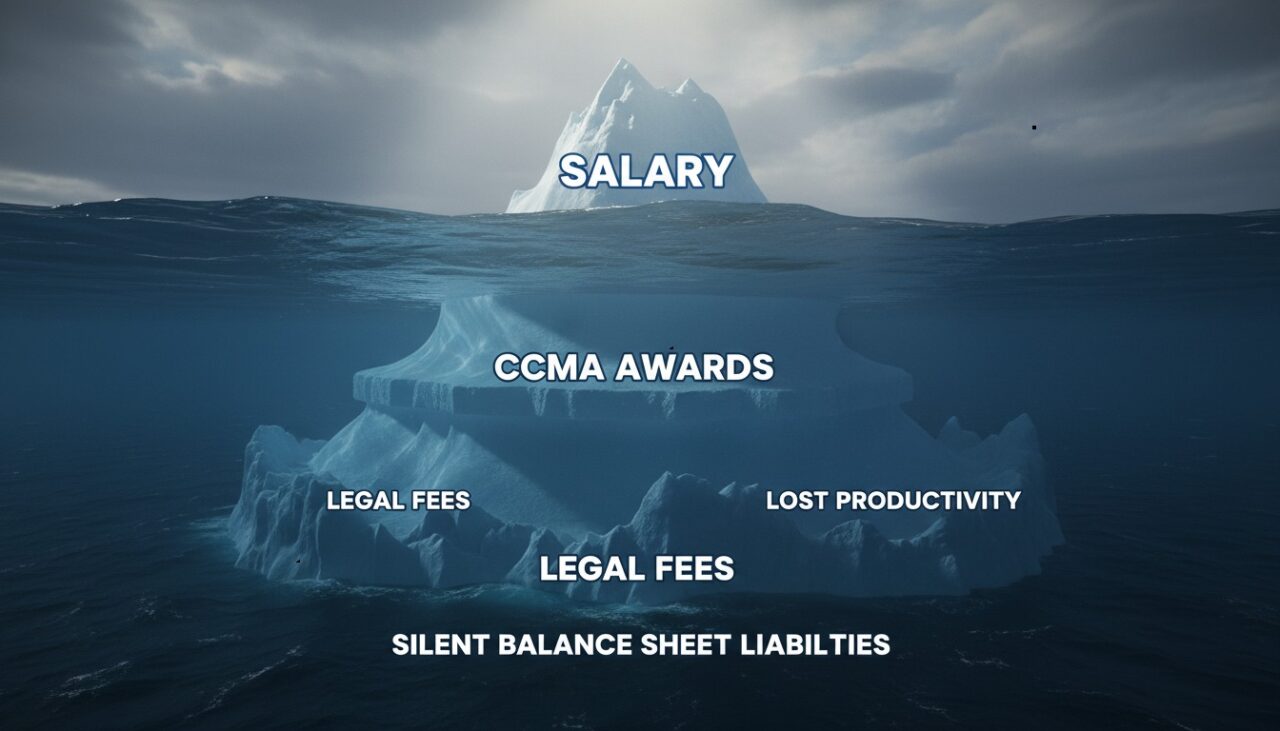
Imagine an iceberg. The visible part, the majestic tip, that’s your employee’s salary. It’s what you budget for, what shows up on your monthly statements. But beneath the surface, hidden from plain sight, lies the vast, silent majority of that iceberg – a “contingent liability.” This is money you don’t know you owe until the cold, hard reality hits. It’s the kind of money that only surfaces when the Sheriff of the Court arrives with a CCMA award, or when your business starts to inexplicably bleed cash.
It’s a scary thought, I know. But the first step to conquering any fear is understanding what you’re up against. In this article, we’re going to pull back the curtain and break down the three hidden financial risks sitting in your office right now, making your payroll significantly higher than you think. This isn’t just theory; it’s the lived experience of countless South African businesses.
The “Untouchable” Employee: A CCMA Trap Waiting to Spring
Every single company, big or small, has one. That one manager or employee. The one you desperately want to part ways with, but you don’t. Why? Because you’re paralysed by the fear of legal fallout. You envision the CCMA, the lawyers, the endless paperwork, and you think, “It’s just not worth the hassle.” So, you keep them on, paying their salary month after month, year after year.
Here’s the gut-wrenching financial reality of that decision:
It’s not just about paying their salary for another month, or even another year. That’s merely the visible tip of this particular iceberg. The real danger lies in what happens if you handle their dismissal incorrectly, especially if there’s procedural unfairness. The Commission for Conciliation, Mediation and Arbitration (CCMA) has the power to award a successful employee up to 12 months’ salary for an ordinary unfair dismissal, and up to 24 months’ salary for an automatically unfair dismissal (e.g., discrimination). Even if the dismissal is substantively fair, procedural flaws can still lead to significant compensation awards.
Let’s do the math, and this is where it gets scary. Imagine that manager you’re hesitant to fire earns R40,000 per month. They’re not just costing you R40,000. They represent a potential R480,000 lawsuit (R40,000 x 12 months) waiting to happen. That’s a half-million rand problem hiding in plain sight, and that doesn’t even account for legal fees you might incur, or potential retrospective back pay if reinstatement is ordered.
💡 Tip: Don’t let fear dictate your workforce decisions. Understanding the risks allows you to mitigate them strategically, rather than avoid them to your detriment.
(Image Placement Suggestion: A dramatic image of an iceberg with a small tip above water and a massive hidden base below, perhaps with text overlays like “Salary” on the tip and “CCMA Awards,” “Legal Fees,” “Lost Productivity” on the submerged part. Alt text: Iceberg illustrating visible payroll costs vs. hidden ‘silent balance sheet’ liabilities including CCMA awards.)
Do you have an employee like this? Stop guessing the cost.
[Native Ad Snippet: Do you have an employee like this? Stop guessing the cost. [Click here to calculate your specific CCMA Risk Exposure in ZAR].]
The “Toxic Contagion”: The Productivity Drain You’re Funding
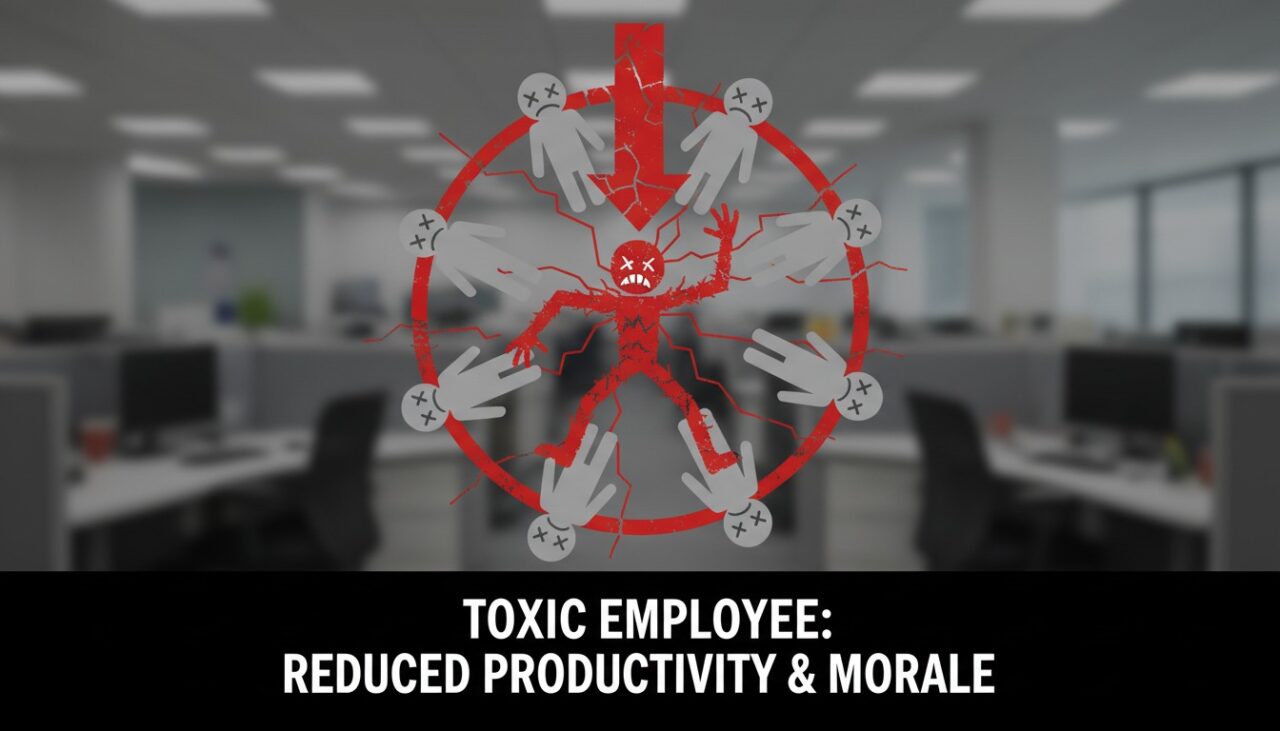
This one’s a silent killer, slowly eroding your business from the inside out. We’ve all seen it: the “toxic asset.” This isn’t just an employee who fails at their own job; it’s someone whose negativity, poor performance, or disruptive behaviour actively stops others from doing their jobs effectively. They’re a contagion, infecting team morale and productivity.
The stats paint a stark picture: Toxic workplaces contribute to one in four working South Africans being diagnosed with depression, and absenteeism linked to workplace depression costs the South African economy an estimated R19 billion annually. Studies have shown that a single toxic employee can cause a significant drop in team output. Some research suggests that a toxic employee can lead to a 30-50% drop in team productivity, and a third of South African employees quit due to toxic leadership.
The cost of a toxic employee is multifaceted and insidious:
- Management Time Sink: Instead of focusing on growth, innovation, or sales, your managers are constantly putting out fires, mediating disputes, or policing the toxic employee’s behaviour. This is valuable, expensive time diverted from profit-generating activities.
- Good Staff Resigning: High-performing, good-natured employees are often the first to leave a toxic environment. When they walk out the door, they take their skills, institutional knowledge, and positive influence with them. You then face recruitment fees for replacements, onboarding costs, and a dip in team performance during the transition. The cost of directly replacing an employee can be as high as 30-60% of their annual salary, with total turnover costs reaching 90-200% when factoring in recruitment, training, and lost productivity.
- Lost Clients and Reputation Damage: Negligence, poor service, or outright unprofessionalism from a toxic employee can directly lead to lost clients. Word of mouth, in today’s digital age, spreads rapidly. A damaged reputation is incredibly difficult and expensive to repair.
The Verdict: You are effectively paying full price for an asset that is not only depreciating your business value but actively costing you more money through reduced output and higher turnover.
⭐ Key Takeaway: A strong, healthy company culture isn’t a “nice-to-have”; it’s a financial imperative.

The Compliance Timebomb: Your “Cheap” Contracts are Costing You a Fortune
Let’s be honest, many of us, especially in the early days, might have thought, “Why pay for custom legal contracts when I can just download one from Google?” Or maybe you’re still using contracts drafted years ago, perhaps even in 2018, and haven’t given them a second thought. “Our contracts are fine,” you might think. This, my friend, is a compliance timebomb ticking away in your HR drawer.
The risk in South Africa is particularly high because our labour law framework changes frequently. The National Minimum Wage Act (NMWA) and Basic Conditions of Employment Act (BCEA) are regularly amended, and what was compliant yesterday might be a serious liability today.
The consequences of non-compliance are severe:
- Department of Labour Fines: These aren’t just flat fees; they can be substantial and punitive. The Department of Employment and Labour actively conducts inspections, issuing hefty fines for non-compliance with various employment laws, including minimum wage violations and inadequate contracts. Some fines can be a minimum of R1.5 million or 2% of your turnover for non-compliance with the Employment Equity Act. Penalties can range from warnings to business closure or even imprisonment for owners.
- Inability to Deduct for Damages: This is a crucial point many miss. If your employment contracts don’t explicitly state certain clauses – for example, allowing for deductions from an employee’s salary for damages caused by their negligence or even theft – you simply cannot deduct the money, even if you have irrefutable proof. You’re left footing the bill.
- Unenforceable Clauses: An outdated or generic contract might contain clauses that are no longer legally sound in South Africa. This means that when you need to rely on them most – perhaps for confidentiality, non-compete, or disciplinary procedures – they could be deemed unenforceable, leaving your business exposed.
The Insight: Those “cheap contracts” you downloaded or never updated are, in reality, the most expensive legal documents you will ever sign. They offer a false sense of security, only to expose you to significant financial and legal risk when it matters most.
✅ Key Takeaway: Regular legal audits of your employment contracts are not an expense; they are an essential investment in protecting your business.
Conclusion: You Can’t Manage What You Don’t Measure
I know this might sound a bit overwhelming, perhaps even scary. The idea that hidden liabilities are lurking in your payroll can certainly keep a business owner up at night. But here’s the thing: fear only holds power when you’re in the dark. The first, most crucial step to fixing these problems, to protecting your business from the “silent balance sheet,” is knowing the numbers.
You can’t manage what you don’t measure. You can’t mitigate risks you’re not even aware of. That’s why we’ve taken the initiative to help South African business owners illuminate these hidden costs.
We built an engine that combines real-world Labour Relations Act (LRA) precedents with your specific company data to give you a genuine, real-world risk score for your workforce liabilities. It’s not about scare tactics; it’s about empowering you with knowledge.
It takes just 3 minutes to complete. It’s free. And it might just save you R1 Million this year by revealing exactly where your true payroll costs lie.