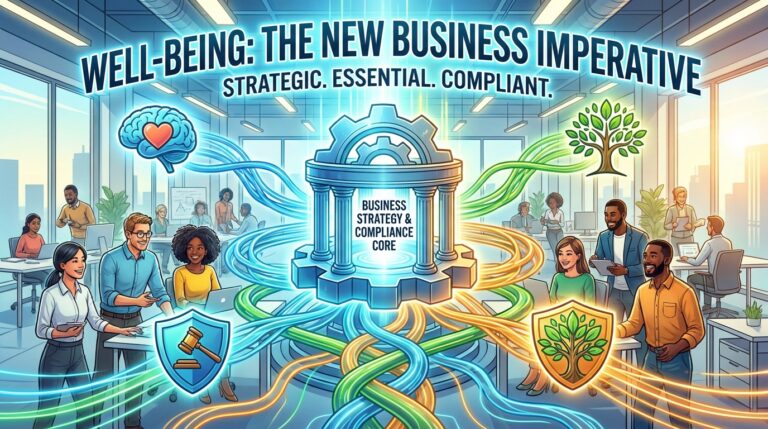
As we move further into 2026, the South African labour landscape is undergoing a profound transformation. The traditional view of “workplace wellness”, once limited to subsidised gym memberships and occasional fruit baskets, has been permanently replaced by a holistic, data-driven necessity. For HR professionals and business leaders across South Africa, prioritising mental health and employee well-being is no longer a “nice-to-have” peripheral benefit; it is a core strategic imperative and a critical component of legal compliance.
In a country marked by unique socio-economic pressures, high levels of burnout, and a robust legal framework, the “Sage” approach to wellness requires us to look deeply at the intersection of psychology, law, and organisational performance. This article explores the trending shifts in South African workplace wellness, the evolving legal expectations, and how HR leaders can build sustainable high-performance cultures in 2026.
1. The Current State of Mental Health in SA Workplaces (2026)
Recent data suggests that South African employees are facing unprecedented levels of cognitive load and emotional exhaustion. The lingering effects of global economic volatility, combined with local infrastructure challenges and the rapid integration of AI in the workplace, have created a “perfect storm” for burnout.
Statistics from early 2026 indicate that approximately 35% of the South African workforce reports symptoms of severe stress or clinical anxiety. For HRSpot readers, this isn’t just a health statistic, it’s a productivity crisis. Unmanaged stress leads to “presenteeism” (being at work but not functioning), increased absenteeism, and high turnover rates that erode the bottom line.
2. Compliance and the Legal Mandate: What the Law Requires
The Sage must always respect the framework of the law. In South Africa, the Occupational Health and Safety Act (OHSA) and the Employment Equity Act provide the foundation for workplace wellness. However, in 2026, the interpretation of “safety” has expanded significantly to include psychological safety.
The Duty of Care
Employers have a “Duty of Care” to provide a working environment that is safe and without risk to the health of employees. Historically, this focused on physical hazards. Today, the Department of Employment and Labour is increasingly scrutinising environments that contribute to mental health degradation.
Code of Good Practice on the Prevention and Elimination of Harassment
The 2022 Code remains a vital touchstone. HR leaders must ensure that wellness programs are not just reactive but proactive in eliminating toxic cultures, bullying, and harassment. All of which are primary drivers of poor mental health. Failure to address these issues can lead to significant liability at the CCMA.
3. Top Workplace Wellness Trends for 2026
What does a high-quality wellness strategy look like in the current South African context?
A. The “Right to Disconnect” Policies
With remote and hybrid work now standard for many SA white-collar roles, the boundaries between home and office have blurred. Forward-thinking South African companies are implementing formal “Right to Disconnect” policies, ensuring employees are not penalised for ignoring communications outside of core hours. This is a crucial step in preventing 24/7 “always-on” fatigue.
B. Financial Wellness as a Pillar of Mental Health
Given the economic climate in South Africa, financial stress is a leading cause of workplace anxiety. In 2026, wellness programs that include financial literacy training, debt counseling, and “earned wage access” (allowing staff to access a portion of their salary before payday) are seeing the highest engagement and ROI.
C. Neurodiversity-Inclusive Workspaces
The Sage understands that different brains work differently. 2026 has seen a surge in “Universal Design” for the workplace, creating environments that accommodate neurodivergent employees (including those with ADHD, Autism, or Dyslexia). This includes quiet zones, sensory-friendly lighting, and flexible communication norms.
4. The ROI of Wellness: Building the Business Case
For HR to secure the budget for deep-dive wellness initiatives, the data must be clear. Investing in mental health is not just altruistic; it is highly profitable.
- Reduction in Absenteeism: Companies with robust Employee Assistance Programs (EAPs) report a 20-25% reduction in unplanned leave.
- Enhanced Retention: In the “War for Talent,” a reputation for caring for staff is a powerful magnet. 2026’s top graduates prioritise “Culture and Wellbeing” over salary alone.
- Improved Innovation: A stressed brain cannot innovate. Psychological safety (the belief that one can take risks without being shamed) is the number one predictor of high-performing teams.
5. Practical Implementation: A Roadmap for HR Leaders
How can you move from theory to practice?
- Conduct a Psychosocial Risk Assessment: Don’t guess. Use surveys and focus groups to identify the specific stressors in your unique workforce.
- Train Managers in “Mental Health First Aid”: Line managers are the front line. They don’t need to be therapists, but they must be able to spot the signs of distress and point employees toward professional help.
- Destigmatise the Conversation: Leadership must lead. When senior executives speak openly about their own challenges and the importance of balance, it gives the rest of the organisation “permission” to be human.
- Audit Your Benefits: Are your medical aid options providing adequate mental health cover? Do you have an EAP that is actually utilised, or is it just a number on a poster?
Conclusion: The Path Forward
In 2026, workplace wellness is the differentiator between companies that merely survive and those that thrive. By adopting the Sage archetype, grounding our strategies in empathy, data, and legal compliance, South African HR leaders can create workplaces that don’t just consume human potential, but nourish it.
HRSpot remains committed to bringing you the deepest insights into the South African labor market. The future of work is well. Is your organization ready?